
Mississippi’s Top Row Crop Impacted by
Pesticide Policy Issues
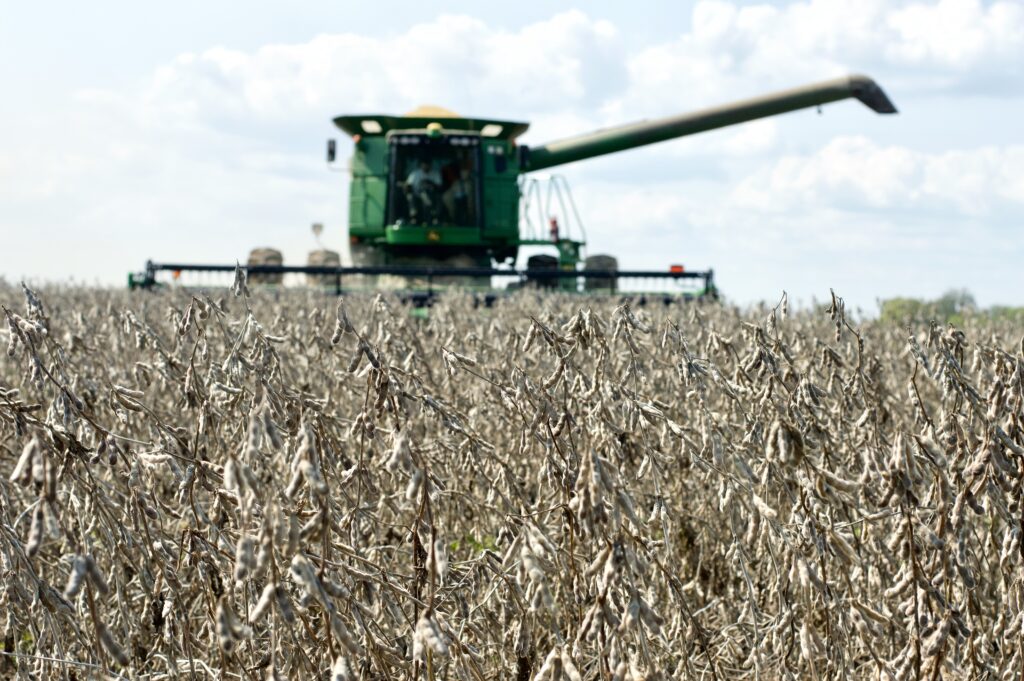
A longstanding leader in the global soybean market, the U.S. is expected to be the second-largest producer, consumer, and exporter of soybeans for 2024. Mississippi farmers play a vital role in this success, positioning Mississippi in the nation’s top 12 soybean-producing states with over 2.1 million acres harvested on some 3,087 farms across the state.
As the top row crop and number two on Mississippi’s agricultural commodities list (behind poultry), Mississippi soybeans yielded a 2023 production value of $1.56 billion. However, as soybean harvest nears for the 2024 season, many farmers are unsure of their planting decisions for the 2025 season due to policy issues surrounding the use of two important pesticides—acephate and dicamba.
Earlier this year, the United States Environmental Protection Agency (EPA) issued two news releases opening comment periods on situations impacting the crop protection industry. The proposed interim decision regarding acephate cancels all usage of the pesticide with the exception of tree injection. The decision to remove labeled uses of acephate will significantly affect farmers, particularly soybean and cotton farmers.
The most economically significant pest for Mississippi soybean farmers is the Red-Banded Stink Bug. Acephate provides the greatest efficacy compared to other pesticides, and although applications can be costly, many soybean producers depend on them to protect their crop throughout the season.
“Acephate is probably the most critical insecticide that we have in the Mid South, particularly for cotton and soybeans. We don’t really have any good alternatives, so It is critical that we have acephate,” said MFBF Environmental Programs Coordinator Andy Whittington.
Whittington explained that although the proposal is based on a drinking water concern from a Dietary Risk Assessment, the EPA’s projected use of acephate is largely overestimated.
“They look at the total number of soybean and cotton acres across the U.S., but acephate is rarely ever used in the Midwest, where the majority of those soybean acres are,” said Whittington. “Our families live and work on these farms, we drink the water, and recreate in our lakes and streams. The safety and well-being of farmers and the environment have always been a top priority for Farm Bureau. However, EPA’s models are predicting an exceptionally high population-adjusted dose. Mississippi Farm Bureau Federation urges organizations like EPA to reconsider how they model pesticide use for risk assessment.”
Pest management in cotton is also challenging. The EPA lists ThryvOn as an alternative, however that presents another issue with ThryvOn’s over-the-top dicamba traits. The decision to vacate the 2020 labels for Xtend, XtendiMax, Engenia, and Tavium, there are currently no products labeled for over-the-top dicamba application.
“Bayer, BASF, and Syngenta have all submitted new labels. Syngenta’s Tavium label just came out on the 23rd. That comment period is open and runs until August 22. After that comment period closes, the EPA will run all three of those labels simultaneously through the review process,” said Whittington. “They are considering those new uses, so they will have to go through the Endangered Species Act review, and the EPA is now immediately doing chemical-specific human health risk spray drift analysis on all new use labels.”
He continued, “It’s a pretty arduous process and we know the planting decisions are typically made in that October-November time frame. So, it’s a pretty heavy lift for them to get a label done in time for the 2025 growing season. I’m not ready to say that it won’t be done, but I’m saying that it may be time to start planning for an alternative herbicide strategy in the event that we don’t have dicamba for next year.”
“We are very supportive of the producer having as many tools in the toolbox as they can to protect their crops, while also being protective of human health and the environment,” said Whittington. “All of these products go through rigorous human health and ecological risk assessments to be registered by EPA, and when used as directed, we believe they are safe. We all have to be good stewards of the resources available, and having multiple tools in the toolbox also helps with resistance issues so we can continue to provide safe food and fiber, for our families.”
Whittington encourages growers, regardless of their planting decisions, to continue with a good pre-program with good residual activity and to stay updated on Mississippi State University Extension’s herbicide program recommendations.