
This week kicks off the nationally celebrated Pollinator Week, an annual event that was first initiated by Pollinator Partnership and designated by the U.S. Senate to highlight the significance of pollinators in our ecosystems and food systems. Pollinator Week also serves to increase awareness about the challenges many pollinators face and what we can do to protect them.
Thursday will also mark the official start of summer 2024, despite the summer temperatures that never fail to settle across Mississippi well ahead of the solstice. Since summer in Mississippi wouldn’t be complete without watermelon, it seems a fitting time to show appreciation for the pollinators—and the beekeepers, farmers, ranchers, and landowners who maintain their habitats—that contribute to the growth of the iconic and refreshing summer treat!
Pollinators play a vital role in the success of many agricultural operations. USDA reports that 75 percent of the world’s flowering plants depend on their pollination efforts. Essential pollinators include a variety of insects and small mammals such as bees, ants, birds, bats, beetles, moths, butterflies, and wasps. Honeybees are often recognized as the “heavy weights” in pollination, responsible for some $15 billion worth of crops in the U.S. each year.
According to the U.S. Department of Agriculture National Agricultural Statistics Service, Mississippi boasted some 19,000 honeybee colonies last year, generating more than $2.4 million in honey production for 2023. Although the state’s major row crops – soybeans, corn and cotton – do not require honeybees for pollination, these insects are responsible for the state’s thriving honey sector and bolster many fruit and vegetable operations.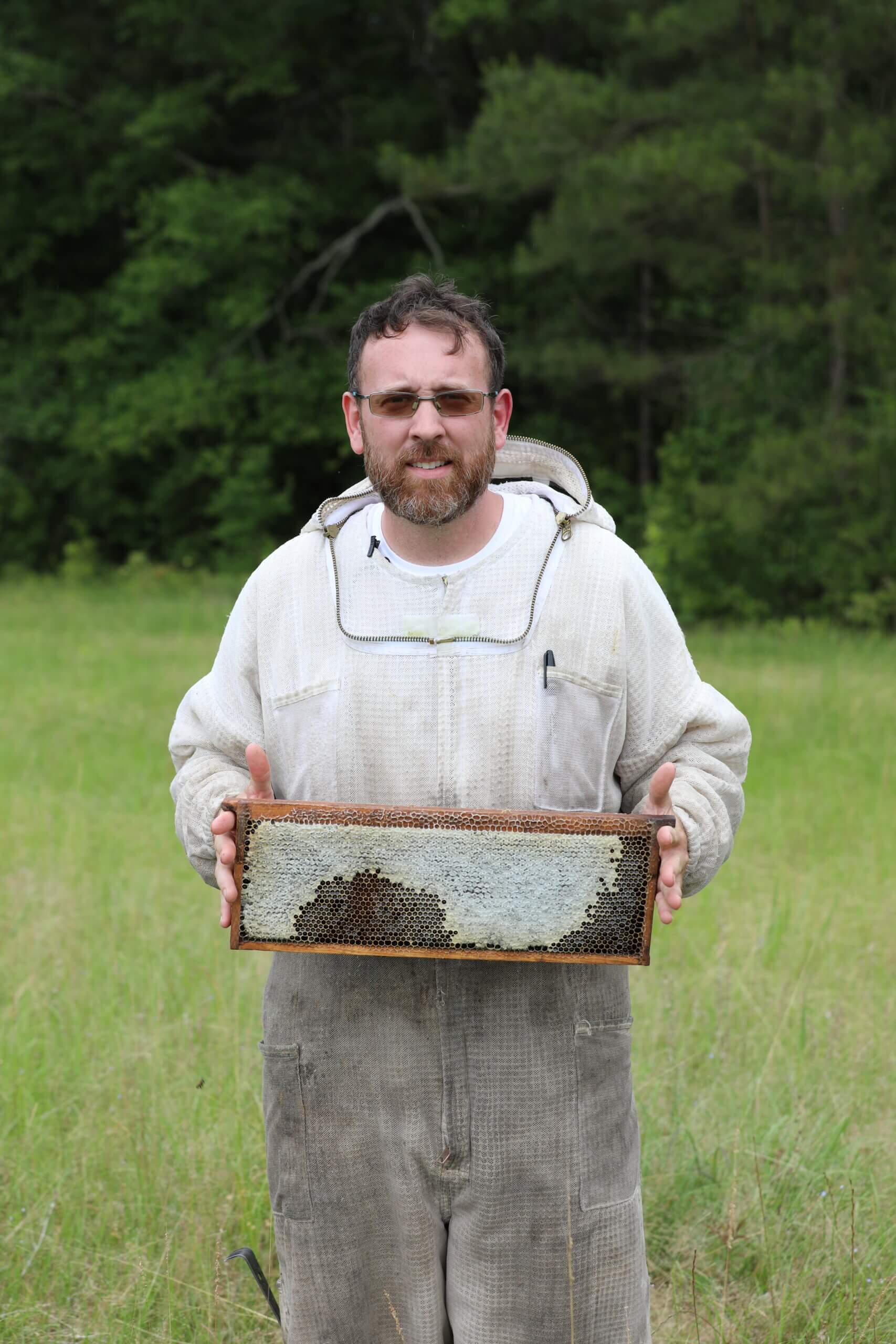
“One in every three bites of food that we eat depends on the work of pollinators. Many of the fruits we grow in Mississippi rely on pollinators for the fruit to set. Seedless watermelon wouldn’t be possible without them, and even on the seeded fruit, pollinators help the crops to have a higher seed count and higher sugar content, so we’re able to have sweeter fruits,” said Austin Smith, chairman of Mississippi Farm Bureau Federation’s Honeybee Commodity Committee.
Smith manages 2,400 honeybee colonies through his family’s operation, Smith Honey Farm, in Petal. In addition to producing all-natural honey and beeswax products, he has also provided bees for pollination at area farms. While his bees have stayed on local farms, Smith said many Mississippi honeybees are sent out of state to places like California during different times of the year to help in the production of pollinator-dependent crops like almonds and apples.
Over the years, serious population declines and habitat losses have put many pollinator species in danger of becoming extinct. That’s why it’s important for stakeholders like Mississippi beekeepers and row crop producers to work together to ensure pollinator health and productivity.
“It’s a three-prong challenge,” said Smith. “Bees and pollinators need blooming plants for their own nutrition, and things like urban sprawl, deforestation, and the concentration of pine trees that eliminate natural hardwoods have a negative impact on the natural pollinator habitats. We’re also dealing with issues from disease and pesticide exposure—not just from farm operations, but also from home gardens, lawn applications and the misuse of things like mosquito spray—that impact populations.”
In 2014, Mississippi Farm Bureau Federation launched the Mississippi Honeybee Stewardship Program in effort to bring the state’s beekeepers, farmers, and pesticide applicators together to advance educational efforts and sustainable practices that protect honeybees. Other organizations, including the Mississippi Beekeepers Association, Mississippi Agricultural Aviation Association, Mississippi Agricultural Consultants Association, Mississippi Agricultural Industry Council, Mississippi Department of Agriculture & Commerce, and Mississippi State University Extension Service, partnered with MFBF to make the program a reality.
Through collaborative efforts, a set of guidelines for protection of the pollinator insects was developed, and the Mississippi “Bee Aware” flag was created to serve as a unified flagging system to clearly identify hive locations and help eliminate the risk of harmful pesticide applications on nearby crops. The black and yellow flags, conceptualized by MFBF, were designed to be highly visible to both ground and aerial pesticide applicators.
Now in its tenth year of existence, Mississippi Honeybee Stewardship Program continues to help foster important cooperation and communication that are essential to protecting pollinators. It is also helping to advance meaningful collaborations among diverse stakeholders in other areas across agriculture.
“It’s important for everyone to work together to be good stewards of the environment and to not focus only on themselves when making decisions,” said Smith. “We have to have an idea of a greater good that prioritizes the longevity of what God has given us so we can pass it on to the next generation.”
Smith says that one of the best ways people can help support pollinators is by showing support for their local beekeepers.
“The domestic honeybee industry is taking a hit from the foreign imports of honey that have made it to the store shelves,” said Smith. He cautions people from buying imported honey because of the potential additives or adulterations it may contain. “The best advice I can give is to know your beekeeper and to buy good, Mississippi-grown honey whenever you can. We’re trying to produce a good crop that we can enjoy and be proud to put on our table, just like you’d want to put on yours.”
As chairman of the Honeybee Commodity Committee, Smith is thankful for the opportunities MFBF has given him and others to be involved in the advancement of his profession.
“We never know what issues we’re going to have to handle because the environments of beekeeping and running a business and farming in general are ever changing. Farm Bureau makes a positive difference and it’s important to be at the forefront with organizations like this to be able to affect change for the greater good.”
To learn more about Pollinator Week and how you can support pollinator health, visit Pollinator Partnership’s website at www.pollinator.org.
Join MFBF in celebrating Pollinator Week 2024 by showing your support for local beekeepers and farmers who are helping to sustain our pollinator populations and our food sources!