
Capitol Comments – Mississippi State Legislature Week 12 Update

The Mississippi Legislature has now finished week 12 of the 2026 Regular Session, marking the final stretch before the scheduled adjournment of Sine Die on Sunday, April 5. Lawmakers are now fully engaged in the conference process—the final and most consequential phase of the legislative session.
With the constitutional 90-day session nearing its conclusion, activity at the Capitol is focused almost entirely on resolving differences between House of Representatives and Senate versions of legislation. This includes finalizing the state budget, tax measures, and some remaining policy bills that impact Mississippi’s agricultural community.
The legislative calendar this coming week is dominated by conference report deadlines, which will ultimately determine which bills reach the Governor’s desk:
• Monday, March 30 – Deadline for final adoption of conference reports on appropriation and revenue bills; and deadline for conference reports on general bills and constitutional amendments to be filed
• Tuesday, March 31 – Deadline to dispose of motions to reconsider conference reports on appropriation and revenue bills
• Wednesday, April 1 – Deadline for first consideration of conference reports on general bills and constitutional amendments
• Thursday, April 2 – Deadline for filing conference reports on general bills and constitutional amendments that have been recommitted for further negotiation
• Friday, April 3 – Deadline for adoption of conference reports on general bills and constitutional amendments after recommittal
• Saturday, April 4 – Deadline to dispose of motions to reconsider conference reports on general bills and constitutional amendments
As lawmakers finalize legislation, it is important to recognize a broader trend shaping many policy discussions at the Capitol: population shifts across Mississippi.
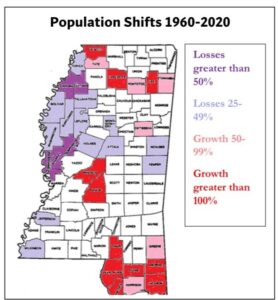
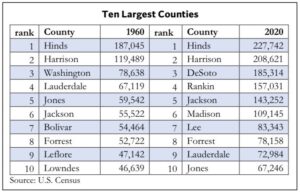
A recent analysis authored by Mark Leggett, President of Mississippi Poultry Association highlights how demographic changes continue to influence legislative priorities. The report notes that since 1960, thirty-four Mississippi counties have experienced population loss totaling more than 240,000 residents, while forty-eight counties have gained over 1.2 million people.
While the state’s overall population has grown by approximately 36 percent, that growth has been uneven concentrated in certain regions while many rural counties have declined. The data further shows that Mississippi’s largest counties now account for a significantly greater share of the state’s total population than they did decades ago.
These shifts have real implications for agriculture and rural communities. Declining populations can impact availability of local services such as hospitals, schools, and input suppliers; workforce availability for agricultural operations; and infrastructure investment and economic development priorities.
At the same time, population growth in other areas can shift legislative focus and funding decisions. As noted in the analysis, many of the issues debated at the Capitol are directly tied to where people live today versus where they lived in the past.
For Mississippi farmers and ranchers, the final week of session carries substantial importance. Measures related to agricultural sales tax exemptions will be decided in these final days. Bills that have progressed this far have already cleared multiple procedural hurdles, but final passage depends on agreement between both chambers through the conference process. Additionally, the state budget plays a key role in funding agricultural programs, extension services, and infrastructure that supports rural communities across Mississippi.
While April 5 remains the official target for adjournment, that date is contingent upon completion of conference work—particularly the state budget. Historically, if negotiations extend beyond anticipated timelines, the Legislature may suspend deadlines or extend the session to finalize its responsibilities, or the Governor can call a special Session.
As always, we will continue to monitor developments closely and provide updates as the Legislature works toward adjournment. These final days are critical, and the outcomes will have lasting impacts on Mississippi agriculture.