Farm Bureau, MDES partner to help agricultural employers navigate H-2A program
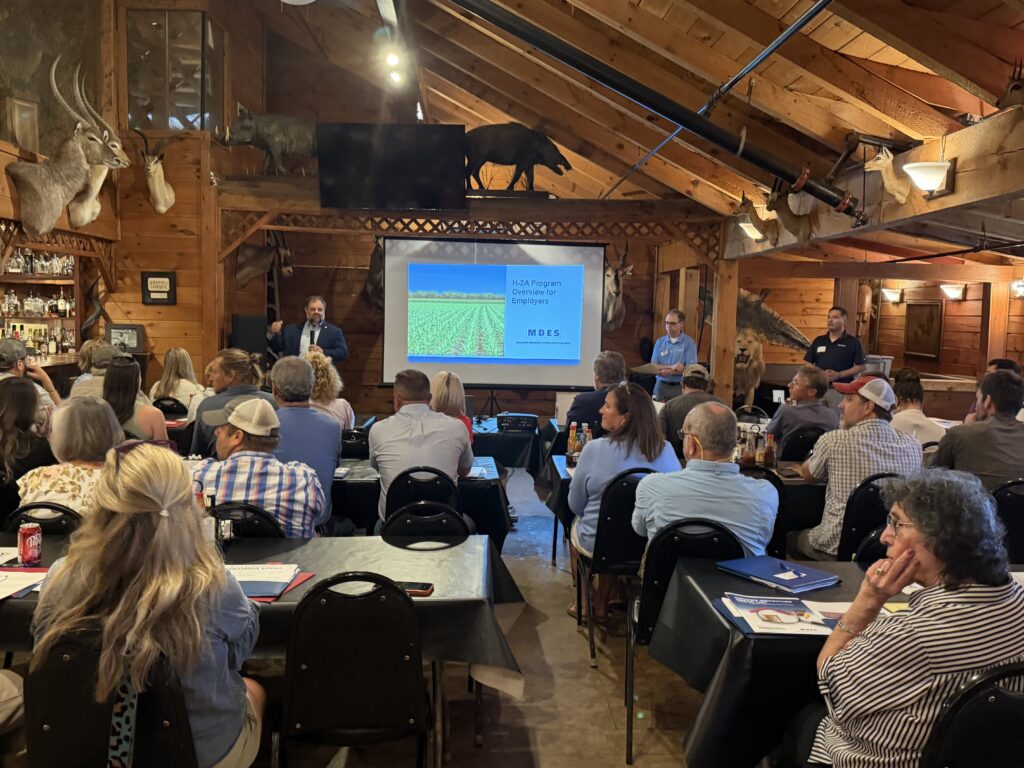
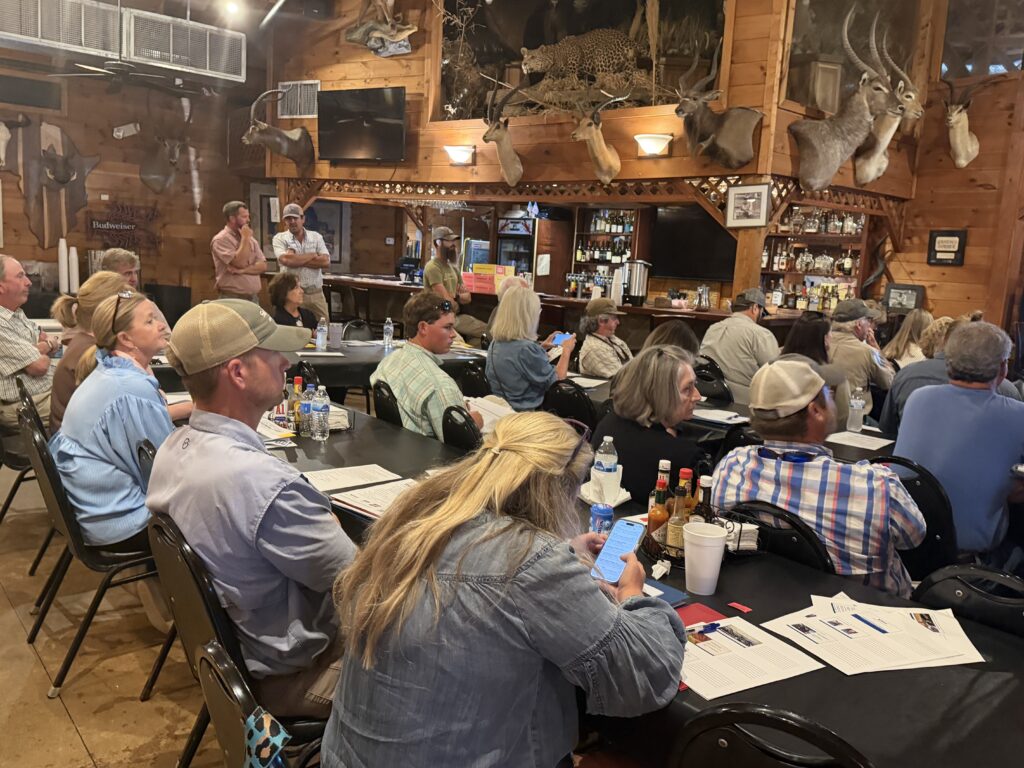
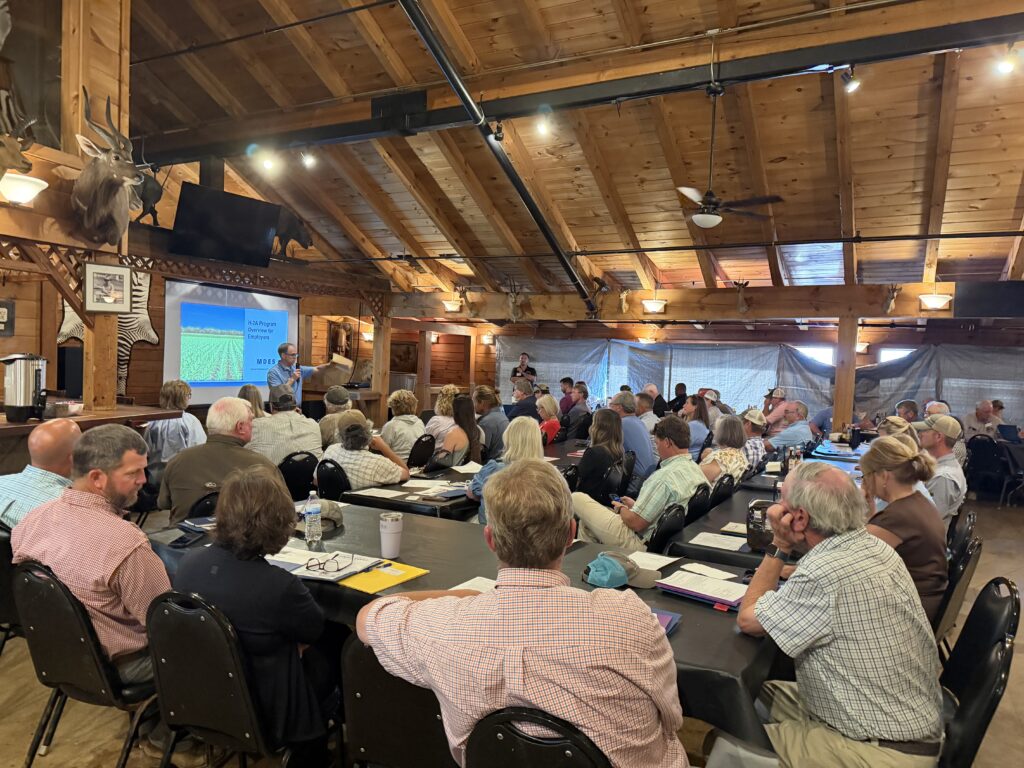
Nearly 100 Mississippi farmers and fellow industry stakeholders recently gathered for an informative H-2A Employer Training Event organized by the Mississippi Department of Employment Security (MDES) and sponsored by Mississippi Farm Bureau Federation. The training brought together producers, H-2A agents, and representatives from state and federal agencies to provide guidance and facilitate a better understanding of one of agriculture’s most complex and highly regulated labor programs.
Throughout the day, attendees received updates on employer compliance requirements, U.S. worker recruitment obligations, wage and hour regulations, transportation and recordkeeping requirements, housing inspections, and occupational safety standards. Representatives from MDES, the U.S. Department of Labor’s Wage and Hour Division, the Occupational Safety and Health Administration (OSHA), and H-2A industry professionals answered questions and shared resources designed to help employers remain compliant while successfully utilizing the program.
“The H-2A program has served 653 employer applications across Mississippi over the past year, many of them supporting farmers who depend on good, steady workers to help ensure Mississippi’s agriculture industry continues to thrive,” said Ben Cloyd, MDES Workforce Programs Supervisor. “There are a lot of moving parts involved in the process at the local, state, and federal levels, so it was really important for us to bring all the participants together in one room to help build relationships and credibility.”
Jimmy Reed, a rice and soybean farmer in Sunflower County, relies on H-2A labor to keep his operation running. But like many of his neighbors and fellow farm employers, he admits the program’s extensive regulations are overwhelming.
“Keeping up with all the rules and documentation is a full-time job,” said Reed. “It’s getting to the point where it’s miserable. But what else can we do?”
Having previously undergone an audit, Reed attended the training to better understand compliance requirements and connect with experts he can call on for future advice or guidance.
“Just knowing who to call and having someone willing to come look at the housing or answer questions before there’s a problem—that’s beneficial,” he said.
The training also featured presentations from H-2A agents who work directly with agricultural employers throughout the application process.
Zach and Merritt Belt Harris, owners of C.O.C. Placement Service in Greenwood, said one of the greatest challenges facing producers is navigating constantly changing regulations while working within application timelines that often don’t align with the realities of the federal approval process.
“The regulations are constantly changing, and employers have to stay on top of those changes,” Zach Harris said. “Education is more important than ever because what applies to one farm may not apply to another.”
The couple, whose company processes approximately 550 H-2A applications annually for employers in 28 states, said demand for the program continues to grow—not because producers prefer it, but because many have exhausted their local labor options.
“People don’t use the H-2A program because they want to,” Merritt Harris said. “They use it because they have to. For many farms, it’s the only way they can continue operating. We have literally had people tell us, ‘If we can’t get H-2A labor, we cannot run our farm’.”
Both emphasized that events like this help ensure everyone—from employers and private agents to state and federal officials—is working from the same information.
“When everyone is in the same room, the information stays consistent,” Zach Harris said. “A lot of times, if farmers are getting information from different sources, the information could be worded differently. It’s good to make sure we’re all on the same page.”
The Harrises also recognized the potential for more long-term benefits from collaborative trainings like this, which not only help producers navigate today’s regulations but also strengthen future advocacy efforts.
“The ag world needs help. The H-2A program is only one piece of a much bigger puzzle, but it’s not getting any easier,” Merritt Harris said. “Our government does a very good job of protecting workers. At some point, we need to protect our farmers. The farmer needs to come first.”
For Mississippi Farm Bureau, sponsoring the training was about more than explaining regulations. It was about making sure farmers know they have partners they can rely on—whether they’re navigating compliance questions, connecting with resources, or advocating for meaningful improvements. Because when Mississippi farmers succeed, we all succeed.