
Grassroots Policy Proposals Considered for 2025
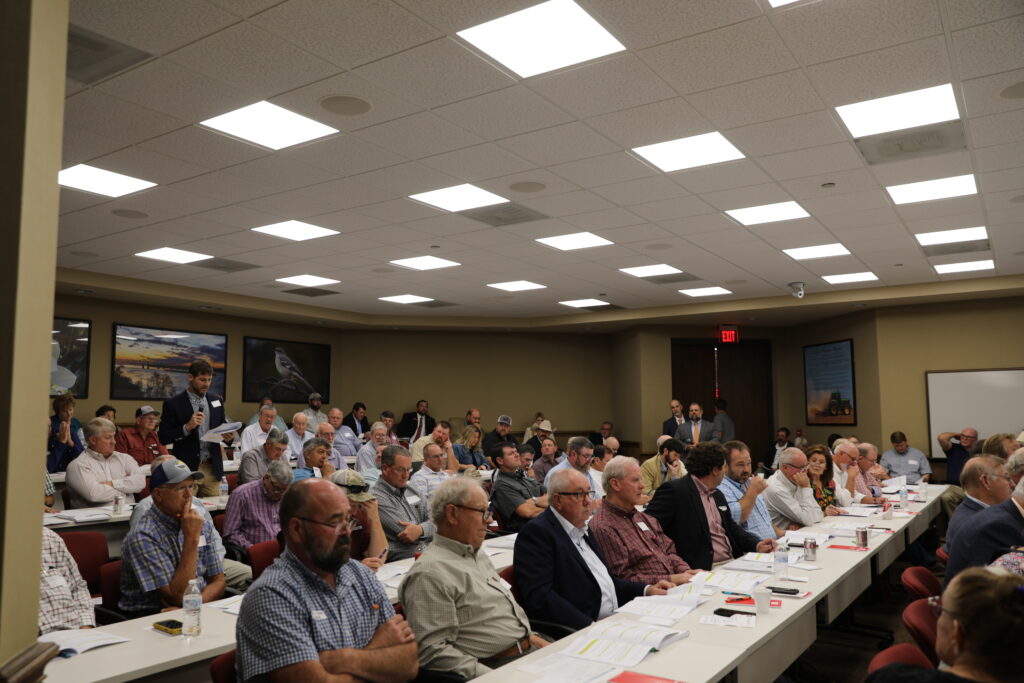
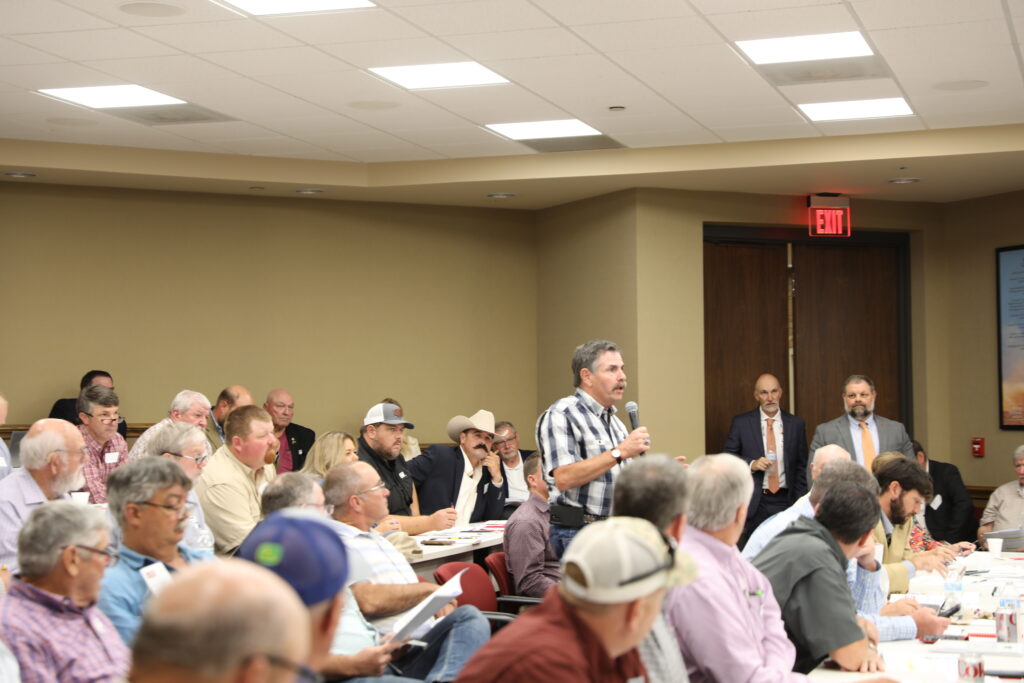
Mississippi Farm Bureau Federation members recently gathered for the annual state resolutions committee meeting in Jackson.
The committee comprises members representing the state’s 82 counties and representatives from the MFBF state board of directors, commodity committees, Young Farmers and Ranchers, and the Women’s Leadership Committee.
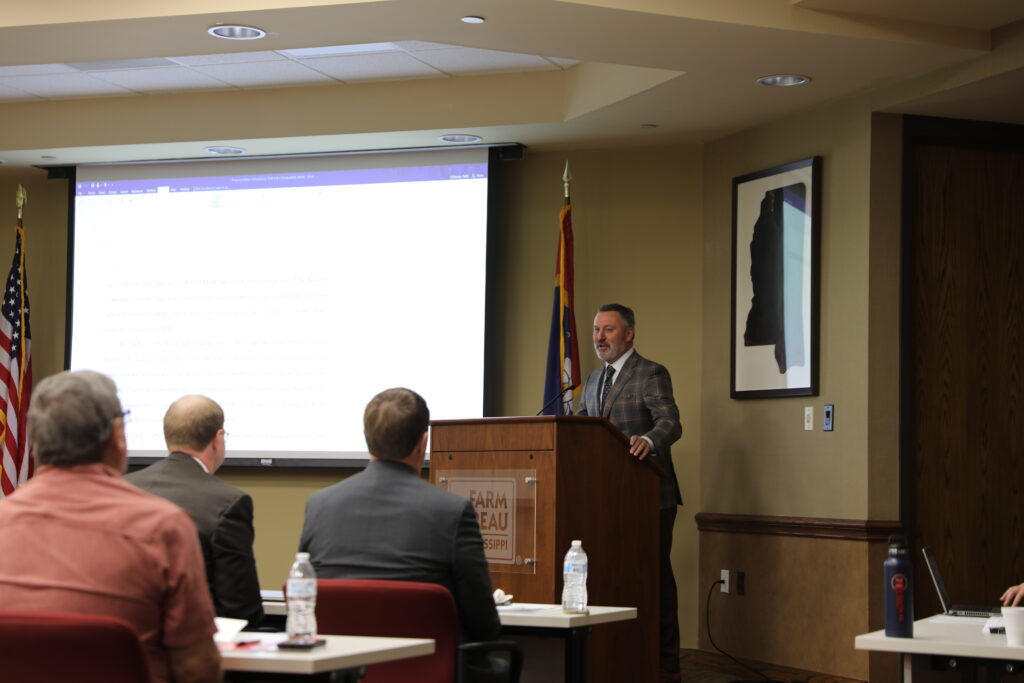
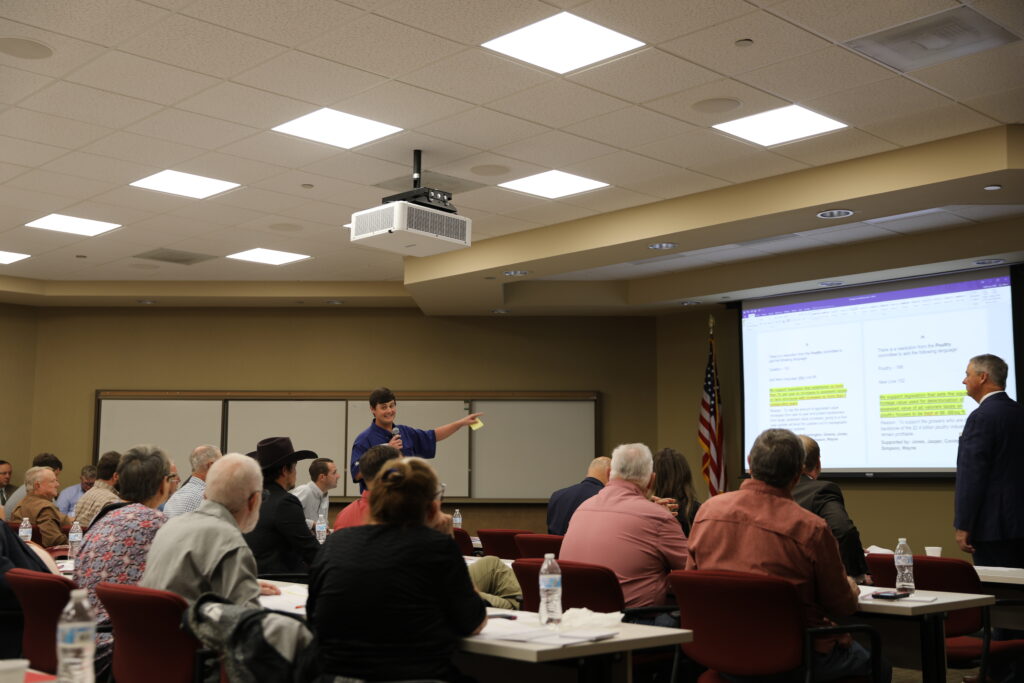
The meeting began with a presentation from Mississippi Speaker of the House Jason White, who spoke to members about what 2025 may hold during the upcoming Legislative session starting in January. Committee members then discussed and voted on policy resolutions, submitted for consideration by individual counties and commodity groups throughout the year, which focus on major agricultural topics, including tax policies, labeling restrictions, private landowner rights, livestock, and more.
“I think taxation is always a hot topic, and that was something that was good to be discussed,” said Mike Ferguson, Tate County board member and dairy farmer. “Sometimes, what translates on the local level is hard to relate to what’s going on at the state level and, sometimes, there’s a little confusion there. I thought the Speaker of the House did an excellent job of previewing what was going on today.”
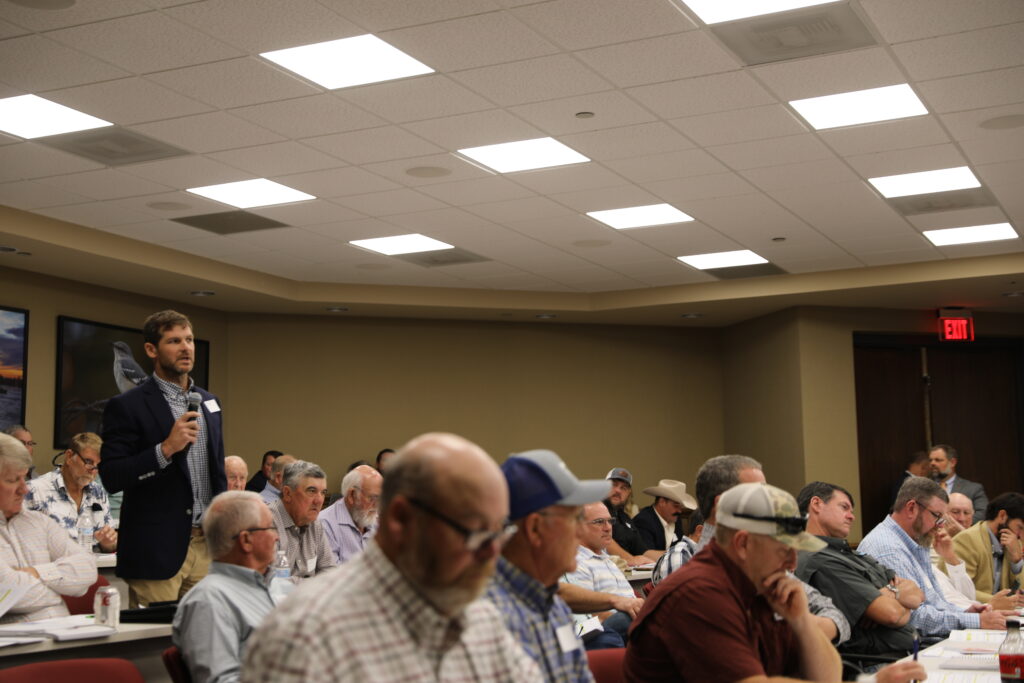
Discussions also included some of the up-and-coming green energy investments being made, particularly in the Delta region of the state. Brad Barr, Bolivar County board member and row crop farmer, explained the committee is focused on heading off any problems that might arise from contracts securing solar farms and wind turbines adjacent to farms.
He said, “We have to have a voice that stands behind us to be able to farm. I’m in the farming business. I’m not in the solar or green energy business, and those things could put a restriction on us being able to do our livelihood as row crop farmers.”
Ferguson echoed similar sentiments, “You need to be informed about how to deal with change that’s going to be coming and to make sure it’s done properly so that it won’t infringe on your rights.”
The state resolutions committee serves as a stepping stone in MFBF’s grassroots policymaking process that begins at the county level. The resolutions that advanced through the process will be presented to the full delegate body for consideration at the 2024 MFBF Annual Convention Dec. 6-8 in Jackson. Those that pass the final step will be adopted into MFBF’s policy book, which guides the work of the organization at the state Capitol and beyond.
“Farm Bureau, not only nationwide, has a voice, but especially in the state of Mississippi,” said Ferguson. “Nothing goes through the legislative process without Farm Bureau’s stamp on it ninety‑five percent of the time, and this process gives the farmer from the local area a voice.”
He continued, “In farming, there are no bad ideas. Some work better than others and this is a process where we can go through that process and find out which are the best ideas to put all of our influence behind and achieve from the state level. That is unique, to be honest with you,” said Ferguson. “We’ve just gone through a tremendous election process nationwide, but this is where it actually starts—at the local level. That’s where I think this process is so valuable.”
MFBF President Mike McCormick said, “Having the united voice of 180,000 Farm Bureau families behind our policies is a tremendous advantage. It means that when we walk into the Capitol, we’re representing the needs, values, and viewpoints of our entire agricultural community. This grassroots-driven process allows us to shape policies that protect and sustain our way of life, and it ensures that every farmer and rancher in Mississippi has a say in the decisions that affect them and their land. Together, we’re making a powerful impact for the future of agriculture in our state.”